
Wholesale Electric Mountain Bikes: Geometry Standards, Mid-Drive Specs & Dealer Margins
Hi all, Leo Liang here. Working out of our base at Clipclop Bikes in Guangzhou, I am surrounded day and night by the universe of electric off-road bikes. More than a job, it's something I truly love,
Hi all, Leo Liang here. Working out of our base at Clipclop Bikes in Guangzhou, I am surrounded day and night by the universe of electric off-road bikes. More than a job, it's something I truly love,
For commercial electric bicycle distributors, fleet managers, and private-label brands, wholesale electric mountain bikes: geometry standards, mid-drive specs & dealer margins represents a critical engineering and operational decision. This comprehensive B2B technical guide analyzes the performance parameters, regulatory compliance frameworks, and factory-direct sourcing strategies required to maximize fleet uptime and commercial margins.
Commercial partners can inspect our manufacturing infrastructure on our OEM/ODM E-Bike Manufacturing Facility page, review standard configurations on our CS01 Fat Tire & CS04 Commercial Utility Platforms, or directly request volume FOB terms via our Commercial Quote Request Portal (MOQ 20).
What actually pushes a higher-end off-road experience?
Let's start with the heart of any e-MTB: the motor. To our B2B customers, the motor is not just about getting them going quickly; it's about delivering a smooth, consistent, intuitive ride that keeps customers coming back time and time again. The market has gravitated toward mid-drive motors, and it's for good reason. Mid-drive units deliver power directly to the crankset, leveraging the bike's inherent gearing. This equates to better weight transfer, a more natural ride quality, and better efficiency, especially on long grades—a critical factor for fleets rented in mountain or trail-predominant regions. In comparing a potential fleet, the critical numbers to watch for are torque and peak power output. Torque, measured in Newton-meters (Nm), is the twisting force that gets you moving, especially from a standstill or up an incline. 85Nm is the industry standard for use on all-mountain and general trail riding. This ensures that even inexperienced riders can conquer challenging terrain without stalling, which translates to a more enjoyable and safer ride. Reliability such as in proven systems in the Bosch Performance Line CX and Shimano's EP8 series delivers again and again in this role. Power is measured in watts (W) and defines the motor's ability to deliver assistance at speed. While nominal power is limited to 250W by law in most locations, the top power increases to 600W or more. It is this top power that's required for overcoming obstacles and accelerating out of corners. In a B2B installation, serviceability of the motor and software platform are also considerations. Find systems with solid diagnostic capabilities and global support networks. The ability to quickly diagnose an issue and find replacement parts is essential to minimizing downtime and maximizing the revenue-generating capability of each unit in your fleet.
Download the 2026 ClipClop Factory Catalog (PDF)
Full e-bike specs, motor & battery options, MOQ, and container loading details.
Why is the backbone of the frame more than metal?
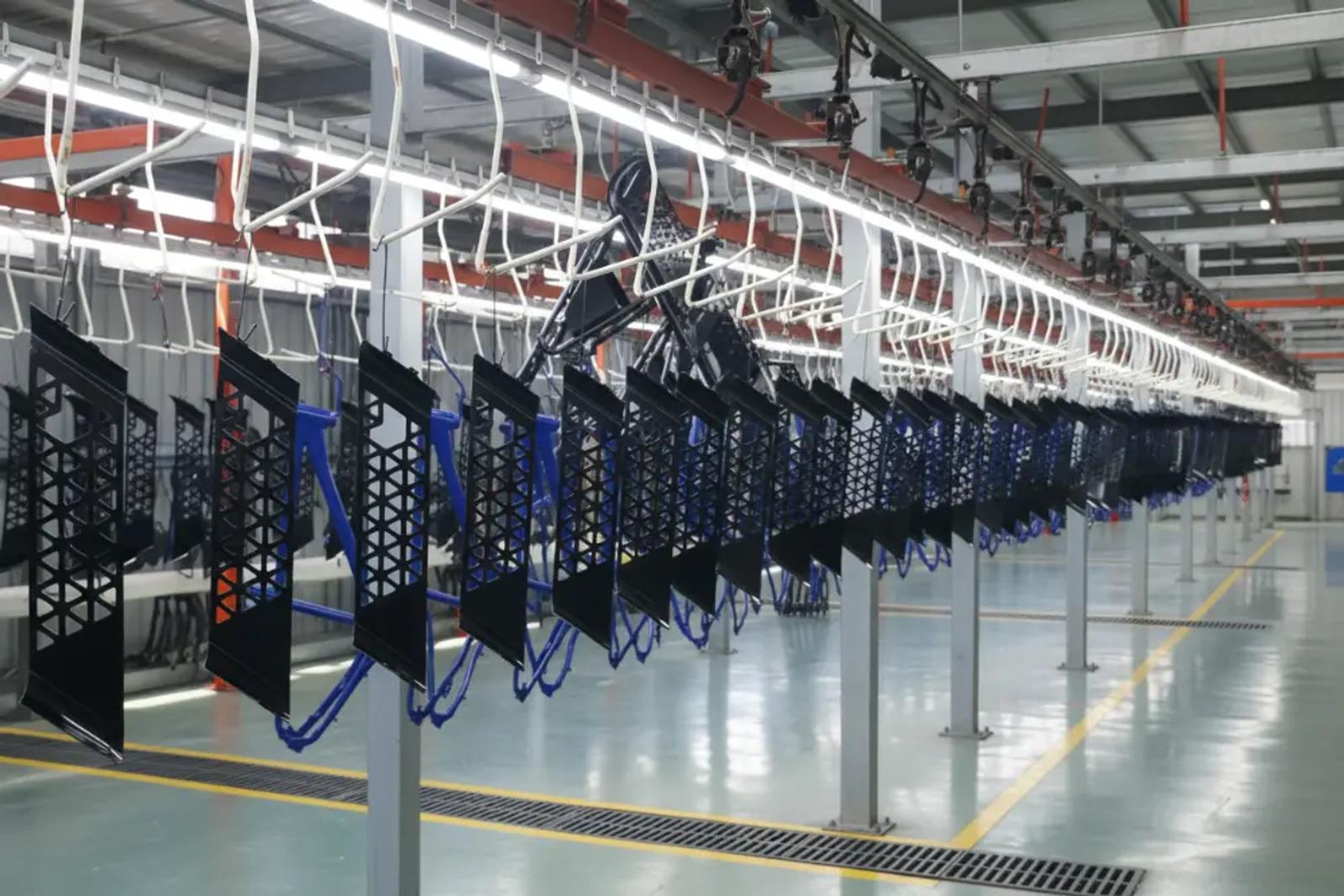
The frame is the skeleton of the e-MTB, which decides its strength, stability, and longevity. While carbon fiber is the high-end consumer application leader, in the majority of B2B situations, aluminum alloys offer a performance, durability, and cost combination second to none. All aluminum, however, is not created equal. The two most common alloys you're likely to encounter are 6061 aluminum and 7005 aluminum. We work primarily with 6061 aluminum, an aluminum-magnesium-silicon alloy, to build our frames here at Clipclop. This material is also renowned for its excellent workability, and we're able to hydroform complex tube forms that provide optimal strength-to-weight ratios. It's also highly corrosion-resistant, a quality well-suited to rental bikes exposed to whatever the weather brings. From a manufacturing standpoint, 6061 aluminum is more weldable and heat-treatable, resulting in more consistent production quality and cost control—a benefit we pass along to our partners. 7005 aluminum, which is zinc alloyed as its major strength-increasing component, has technically a higher tensile strength. However in the real world of trail riding, frame design overall, weld integrity, and tube engineering have much more to do with its end durability than its minimal alloy difference in strength. To an OEM partner or distributor, material choices for a frame have a direct impact on product positioning in the marketplace and cost of ownership. A soundly engineered 6061 aluminum frame provides the toughness to withstand the rigors of daily rental misuse and the occasional crash without sacrificing a longer service life or better return on investment.
How does geometry define the use and rider appeal of a bicycle?
Aside from the material, the geometry of a frame is the heart of how a bike handles. These angles and measurements determine whether a bike feels good at speed, whether it's fast around tight turns, or if it's comfortable for a day of saddle time. For B2B buyers, knowing key geometry figures is critical so your fleet is appropriate for your target market and terrain. Perhaps the most talked about figure is the head tube angle. This is the steer angle of the steering axis of the fork to the ground. New enduro and trail e-MTBs have "slacker" head tube angles, typically in the 64-66 degree range. A slacker angle puts the front wheel further out ahead of the rider, which makes the bike more stable on steep hills and rough trails. For rent use in bike parks or where the terrain is stiff and aggressive trails dominate, this is a preferred characteristic that enhances rider confidence. Conversely, a cross-country-oriented bike might feature a steeper angle of approximately 67-69 degrees for quicker, more responsive handling on smoother, turny terrain. Reach, the horizontal distance between the bottom bracket and the center of the head tube, is also an extremely critical measurement. Increased reach numbers and shorter stems allow more room within the cockpit for the body to move and are easier to control and balance. When selecting frame sizes when purchasing a fleet, pay attention to reach and stack numbers throughout the range so that you can comfortably accommodate a wide variety of rider heights and receive the widest potential customer base. Pay close attention to these specifications and you won't be buying just an assortment of pieces, but a well-planned machine that will give you a better ride.
Can your battery system survive the ride?
For an e-mountain bike, the battery is the gas tank. For a rental business, it's a plain driver of customer experience and business productivity. An early termination of a customer's ride due to a dead battery is an outright bad review. That is why battery capacity, measured in watt-hours (Wh), is a top-of-the-page spec. For trail and all-mountain e-MTBs being used for half-day or full-day rental, a battery capacity of 600Wh to 750Wh is currently the standard. This provides an adequate range for most riders to experience fulfilling loops without concern for range. Some of the higher-end models even are heading towards 840Wh or higher. Physical integration of the battery is another issue to bear in mind. Modern e-MTBs almost all integrate batteries into the downtube. It not only looks wonderful but protects the battery from crashing and lowers the center of gravity of the bicycle, improving its handling. But in rental fleets, ease of battery removal is a convenient concern. A simple-to-use lock and removal system makes battery switching and charging away from the bike convenient, which is typically faster than taking all bikes to a power outlet. Moreover, how well the battery management system (BMS) and the cells themselves (e.g., from quality suppliers like Samsung or LG) are constructed is central to long life and safety. A robust BMS protects against overcharging, overheating, and deep discharging, significantly extending the battery's usable lifespan over hundreds of charge cycles—a critical factor for the long-term profitability of your fleet.
Is your suspension tuned for the right terrain?
Suspension is what separates a true mountain bike from a hybrid with knobby tires. It absorbs impacts, maintains traction, and ultimately, provides control. The amount of suspension travel—the extent to which wheels can move up and down to soak up bumps—is one of the most important indicators of the use an e-MTB will be aimed at. Adapting the suspension travel to your local terrain and target customers is important. For cross-country (XC) and minimal trail riding, where performance dictates, suspension travel tends to be between 120mm and 140mm. This is typically sufficient for taming little rocks and roots without being lethargic on climbs. At a do-it-all trail bike, which is the sweet spot for many rental and retail establishments, travel reaches the 140mm to 160mm level. This provides a sure-footed and capable feel over a wide range of terrain, from smooth singletrack to more technical downhill. For enduro and bike park riding, where all consideration is essentially concentrated on downhill ability, travel is as much as 160mm to 180mm or more. These bicycles are made to absorb the largest hits and the most vertical chutes. Being a B2B supplier, the option to offer a range of carefully chosen 150mm travel trail bikes, for example, gives you the ability to be able to supply the widest possible range of customer from intermediate travelers through to more experienced local riders.
What do trends in the market tell you about expected demand?
To be at the forefront of this market means understanding not just today's technology but tomorrow's trends. Not only is the e-bike market increasing, but it's explosive. Market research still anticipates a compound annual growth rate (CAGR) of over 10.3% between now and 2030. This is not a hobby segment; this is a fundamental reshaping of mobility and leisure. For our B2B clients, that translates into a huge and ongoing opportunity. Smart technology integration is one of the underlying trends we're seeing. Aspects like onboard GPS for tracking and fleet management, mobile app connectivity for ride setting and diagnostic purposes, and built-in lighting systems are gaining popularity. In the case of a rental company, such aspects can make operations simpler, enhance security, and provide a better user experience. A diversification of the e-MTB class itself is also being realized as a trend. We're seeing the emergence of skinny "diet" e-bikes with reduced batteries and motors and rugged e-cargo bikes for trail-building or utility use. As a dealer or distributor, knowledge of these new niches allows you to reach more customers and differentiate yourself from others. It is Clipclop's business to be at the forefront of creating such innovations, offering our partners technology access that not only bolsters their product but ideally positions them to address evolving market demands.
How do you configure a bike for a specific B2B application?
A solution of one size fits all never works in the B2B space. The perfect e-MTB for a hotel rental fleet in a beach town will be worlds apart from one headed to a high-alpine bike park. Strategic component configuration enters into play here. A rental fleet for a high-use, hilly terrain requires low maintenance and the ability to withstand heavy use. This means specifying a solid motor with 85Nm torque to handle hills, a massive 750Wh battery to give all-day range, rugged 6061 aluminum frames, and robust four-piston hydraulic disc brakes for safety. Tyres need to have puncture-proof casings, and touchpoints like grips and saddles need to be solid. If targeting the enthusiast retail space, focus shifts somewhat towards performance and adjustable features. Here, supplying bikes with high-performance air suspension adjustable to rider weight, 12-speed transmissions to have wide gearing, and differences in frame size offerings as well as even wheel sizes (29er vs. Mullet) becomes more important. Our mission at Clipclop is to help closely with you as a smart partner, taking you to select and configure the optimal setup for your specific business model and user base, so that every bike you purchase is customized specifically to its application.
Are You Ready to Build Your Dream E-MTB Fleet?
Choosing the right electric mountain bike is a significant investment, but one that can pay very sweet dividends when done with know-how and foresight. From the nuances of motor torque to the precision of frame geometry and the long-term reward of having a sound battery system, every part is a key to the success of your undertaking. We've had a lot of history together, but the conversation doesn't have to stop here. That's what I and the Clipclop crew live for. We're not making more bikes; we're building relationships. We're here to help you guide you through these technology decisions and design a product line that excites your customers and grows your company.
If you have any questions about selecting the right e-MTB, customizing a solution, or meeting any special OEM specifications, we encourage you to contact us. We specialize in producing and exporting electric off-road bikes and provide turnkey solutions for wholesalers, dealers, and global brand partners. Let's do something great together.
References:
- Which is the best e-bike motor? Power, punch and range compared. (2024, October 14). MBR. https://www.mbr.co.uk/buyers_guide/best-ebike-motor-388838
ClipClop Manufacturing Standards & Build Quality
Looking for production-grade e-bike manufacturing? Explore our ClipClop CS03 Sport E-MTB and our ClipClop M26 All-Terrain E-MTB, engineered with factory-direct OEM customization from 10 units.
- The perfect eMTB geometry – what's the secret behind angles, reach and stack? (2020, January 10). E-MOUNTAINBIKE Magazine. https://ebike-mtb.com/en/emtbs-geometry/
- Electric Bike (E-Bike) Battery Market Size, Share | Growth Report. Fortune Business Insights. https://www.fortunebusinessinsights.com/electric-bike-battery-market-112115
Commercial Procurement & Fleet Sourcing with ClipClop
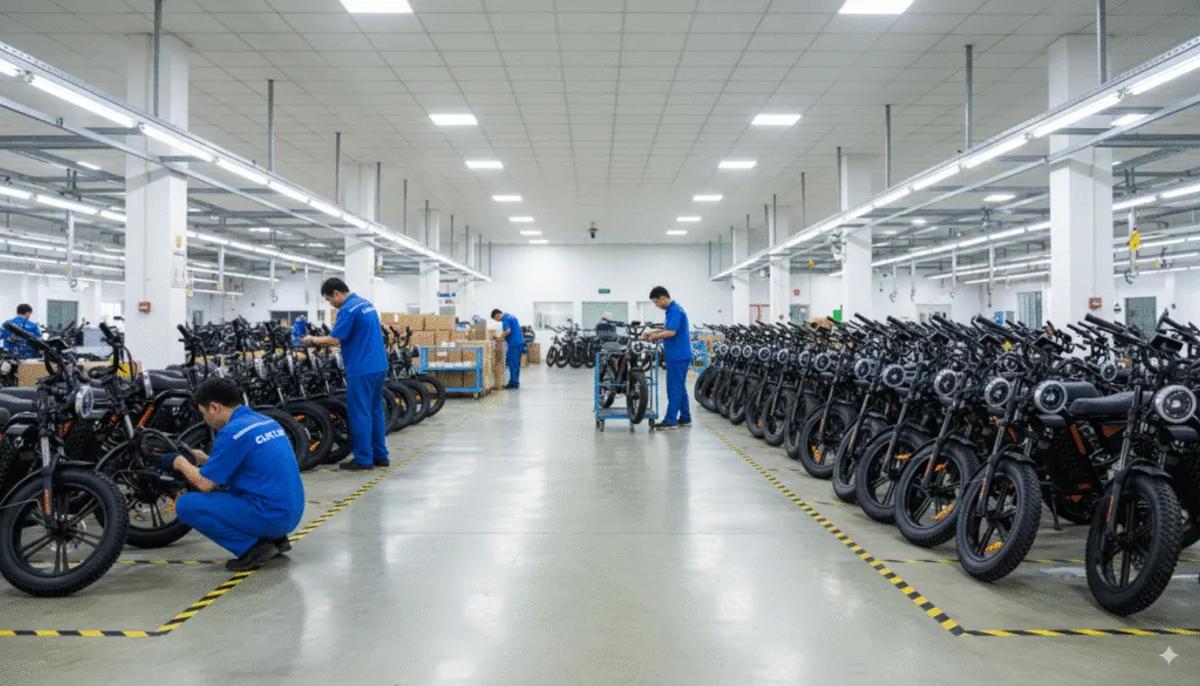
Deploying electric bicycle fleets or distributing private-label e-bikes requires a trusted manufacturing partner capable of consistent container-level production, robot-welded frame alignment, and rigorous batch QC. From our 25,000 m² factory in Qingyuan, Guangdong, ClipClop provides end-to-end OEM/ODM electric bike manufacturing services with an accessible MOQ of just 20 units per SKU. Every container order includes dedicated spare parts allocation (2% free warranty backup components), full international compliance documentation (EN 15194, UL 2849, UN38.3), and 15-day sample dispatch.
Ready to evaluate engineering samples for the CS01 Fat Tire & CS04 Commercial Utility Platforms or review container FOB volume pricing? Visit our Commercial RFQ Portal to submit your technical specifications, or speak directly with our engineering sales team via our B2B contact desk.
Download the 2026 ClipClop Factory Catalog (PDF)
Full e-bike specs, motor & battery options, MOQ, and container loading details.
More OEM field notes.
China Electric Bike Factory Sourcing at Canton Fair 2026: OEM Booth, Samples & Factory Tours
Heavy-Duty Fat Tire E-Bike Sourcing: 750W/1000W High-Torque Platforms for Importers
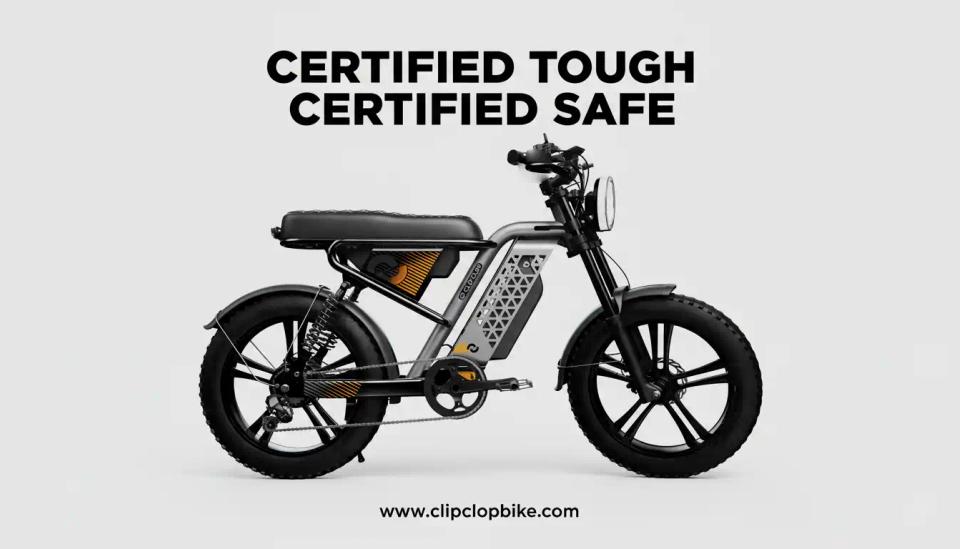
Demystifying EN 15194: The Core of CE Safety Standards for E-Bikes
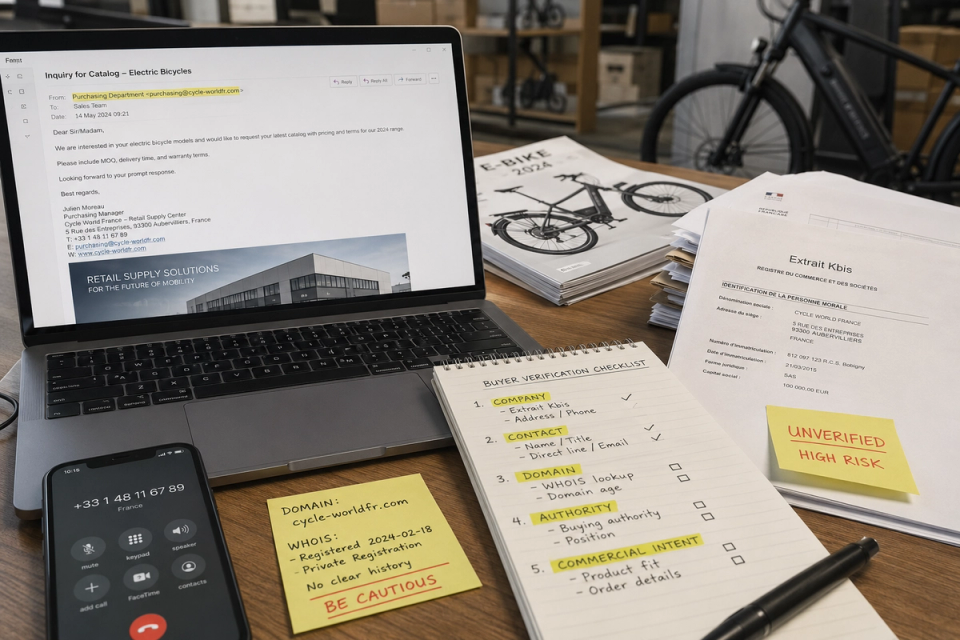
How We Verify B2B Buyers: A Case Study in Preventing Procurement Fraud & Impersonation
Send your brief. We will field-note back.
Reply includes the feasibility view, sample cost, MOQ, and the next step for your project. We aim to respond within 48 hours.