
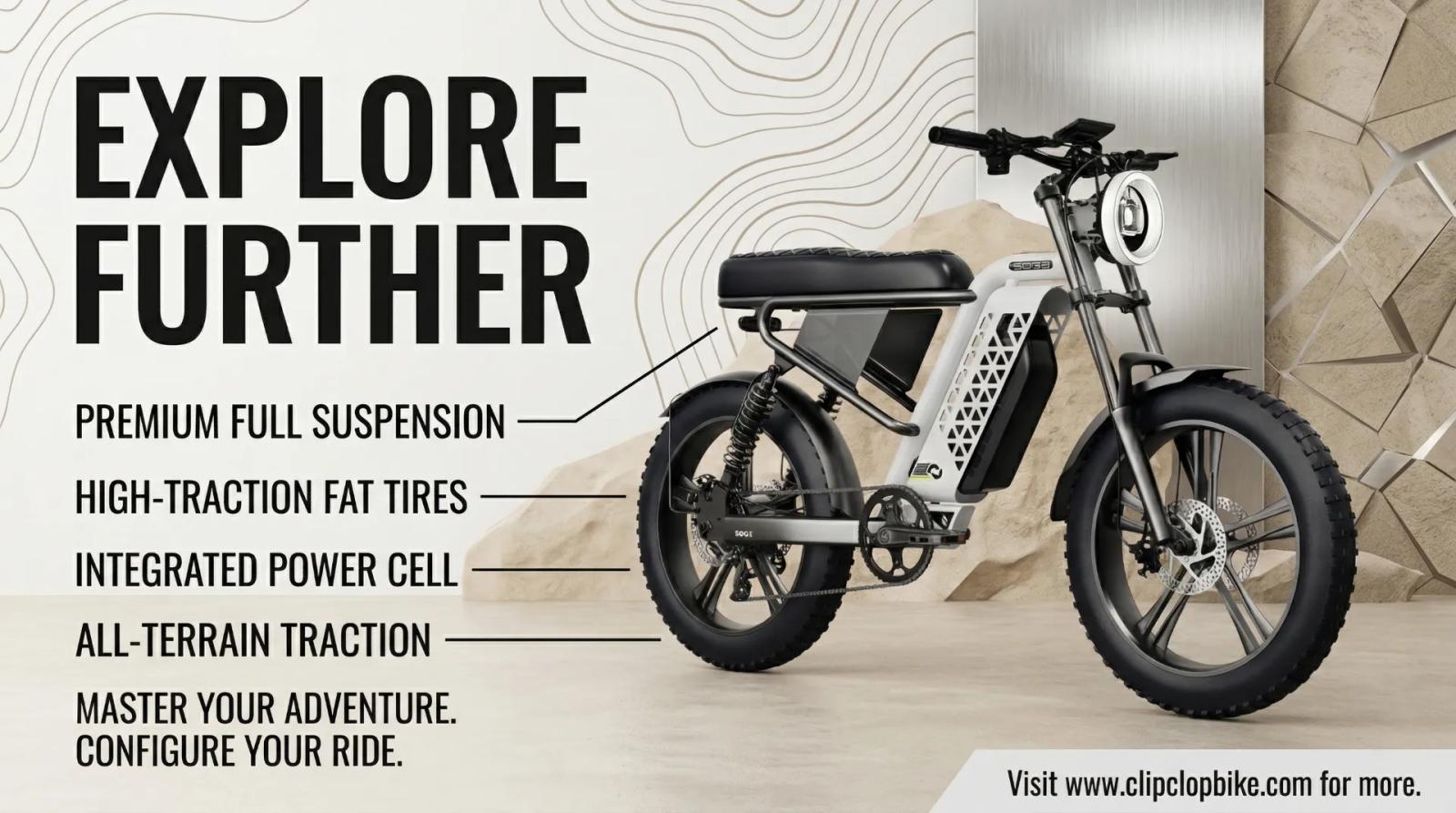
Full Suspension Electric Bikes: The Complete Guide for 2026
Every e-bike shopper hits the same wall. Two bikes look identical on paper — same motor, same battery — but one has a suspension fork. And suddenly you're in a rabbit hole asking if it's worth the
Every e-bike shopper hits the same wall. Two bikes look identical on paper — same motor, same battery — but one has a suspension fork. And suddenly you're in a rabbit hole asking if it's worth the
Every e-bike shopper hits the same wall. Two bikes look identical on paper — same motor, same battery — but one has a suspension fork. And suddenly you're in a rabbit hole asking if it's worth the trade-offs. I've been there.
Commercial partners can inspect our manufacturing infrastructure on our OEM/ODM E-Bike Manufacturing Facility page, review standard configurations on our M20 Enduro eMTB & L1 Pro Dual-Suspension Platforms, or directly request volume FOB terms via our Commercial Quote Request Portal (MOQ 20).
Full suspension e-bikes are one of the most debated topics in e-biking. The tech has matured massively. But so has the marketing noise. Let me walk you through what actually matters.
What Is a Full Suspension E-Bike?
A full suspension e-bike has suspension at both wheels — a front fork and a rear shock with linkage. Both wheels soak up bumps independently. I'm being honest: I thought "full suspension" was just marketing at first. Turns out the name is literal. Both wheels genuinely float over rough terrain.
You'll hear riders call these "full-squish" bikes — once you've ridden one on rocky trails, the term makes perfect sense. Here's the key spectrum: rigid bikes have zero suspension. True full suspension has travel front and rear. In the middle are hardtails — fork only — and bikes like the ClipClop L1, with a quality front fork but no rear shock. That's where I think most buyers should actually be looking in 2025.
Download the 2026 ClipClop Factory Catalog (PDF)
Full e-bike specs, motor & battery options, MOQ, and container loading details.
How Full Suspension Works
Front fork: stanchion tubes slide into the crown under impact, compressing against an air or coil spring and damping system. Hit a pothole, fork absorbs the energy and returns. Simple idea. Sophisticated execution.
Rear suspension is more complex — a shock connected to a linkage system. When the rear wheel hits a bump, the linkage activates the shock, soaking up force before it reaches you. The key benefit is "trail compliance" — rear wheel stays planted over obstacles, giving better traction climbing and braking.
Full Suspension vs Hardtail
| Feature | Hardtail | Full Suspension |
|---|---|---|
| Suspension | Fork only | Fork + rear shock |
| Weight | 5-10 lbs lighter | Heavier |
| Cost | Lower | $300-$1,500 more |
| Efficiency | Better on smooth ground | Slight loss on rough terrain |
| Best for | Commuting, city | Aggressive MTB trails |
| Maintenance | Minimal | Rear shock + linkages |
Full suspension isn't automatically "better." It's more specialized. City streets and bike paths? You're paying for suspension you won't use. MTB trails with rocks and drops? Full suspension isn't a luxury. It's a safety feature. Here's what surprised me: body weight shifts the calculus. Heavier riders — over 90 kg — benefit more from full suspension because they compress forks more acutely.
Pros and Cons
Upsides: Comfort on rough terrain — wrists, back, tailbone notice immediately. Both wheels stay planted, handling is more predictable. Rider fatigue drops on long rough rides. Newer riders can push boundaries faster because full suspension forgives mistakes.
Downsides — most guides undersell these: Added weight (5-10 pounds). Higher cost ($300-$1,500 premium). More maintenance — pivot points need cleaning, seals need checking. And here's what nobody tells you: on smooth asphalt, full suspension can feel slightly less efficient. The rear absorbs some of your pedaling energy.
I'm going to be blunt: a lot of buyers get oversold on full suspension. Marketing pushes "more is better." Sometimes it is. Sometimes it's a waste. Know your actual terrain before you decide.
The Weight Trade-Off
Yes, full suspension reduces range — but probably less than you fear. I'd estimate 10-20% less range. A 70km hardtail might deliver 56-63km in equivalent full suspension form. Motor assist partially compensates for the weight. And if that suspension keeps you riding more comfortably longer, you might get more total ride time despite reduced range.
The L1's front fork adds only about 2-3 kg. You're getting most of the comfort benefit with barely any range penalty. Most riders find that totally acceptable.
ClipClop L1: The Smart Starting Point
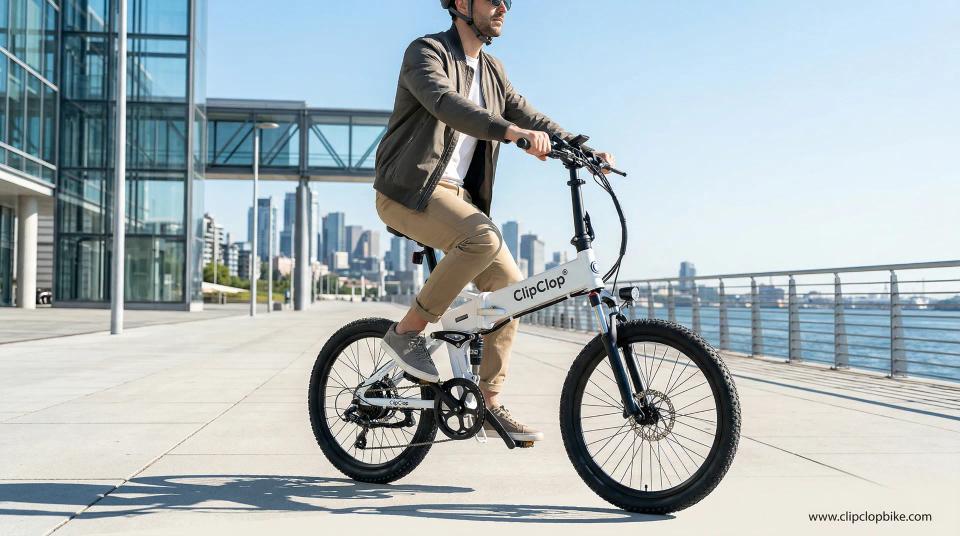
ClipClop L1: 20" Aluminum 6061 | Motor: 250W/350W/500W/750W/1000W
Battery: 48V 15AH Lithium | Range: 60-80KM | Speed: 25-55KM/H
Tires: 20×4.0 Fat Tires | Brakes: Hydraulic Disc
The L1 is built around a philosophy I genuinely agree with: front suspension is the most impactful single upgrade, without needing full rear suspension to get a dramatically better ride. This is ClipClop's "LESS IS MORE" design philosophy, and it shows real product wisdom.
The 20×4.0 fat tires already provide cushioning on their own. Combined with the front suspension fork, you get a two-layer comfort system without rear suspension complexity. The fork handles potholes, curbs, and light trail obstacles. Both wheels stay planted — front absorbs the impact, tire maintains road contact.
The 48V 15AH battery delivers 60-80km of range depending on motor selection. Motor options span 250W to 1000W — from EU-compliant pedelec to serious hill-climbing power. Hydraulic disc brakes provide reliable stopping in all conditions. Enough suspension for rough urban roads and light trails, without the weight penalty or maintenance complexity of true full suspension. Buying direct from a factory producing 10,000 e-bikes monthly means specification-rich pricing that traditional retail brands can't match.
When to Choose Each
Choose hardtail or L1 if: primary riding is paved roads or bike paths, range is your priority, commuting-focused, tighter budget, newer rider still figuring out preferences.
Choose full suspension if: regular MTB trails with rocks and roots, heavier rider (90kg+), joint issues, fire roads and forest trails, experienced rider who'll use improved traction and control.
What to Look for When Buying
Motor power: 250-350W for flat city riding. 500-750W for genuine hill-climbing. 1000W for serious power on steep terrain.
Battery: 48V systems are more stable than 36V. 15AH is a practical middle ground. The L2 model doubles up with 48V 15AH×2 for 80-100km range.
Brakes: Hydraulic disc brakes are non-negotiable for e-bikes. Higher speeds and heavier weights demand serious stopping power.
Tires: Fat tires (3.0"+ wide) like the L1's 20×4.0 provide cushioning and stability on loose surfaces.
ClipClop Manufacturing Standards & Build Quality
Founded in 2017 in Guangdong, China, ClipClop operates a 25,000 m² modern manufacturing facility in Guangqing Industrial Park (Shijiao Town, Qingyuan) paired with a dedicated R&D and design center in Guangzhou, delivering a monthly capacity of 10,000 complete e-bikes (120,000+ annually). Rather than third-party rebadging, all ClipClop frames are custom-engineered from 6061-T6 aluminum extrusions, joined via automated robotic laser welding, and T4/T6 stress-relieved to withstand 100,000+ vertical fatigue cycles under ISO 4210 and EN 15194 standards. Finished on an automated electrostatic powder-coating line exceeding 96-hour neutral salt spray corrosion tests, each unit undergoes 100% dyno bench motor, hydraulic brake, and BMS safety testing before container packing. Supported by 50+ technical patents and national high-tech enterprise certification, ClipClop provides direct OEM/ODM customization and container-optimized logistics (up to 320+ units per 40HC) for global distributors and fleet operators.
Maintenance Tips
After every muddy ride, wipe down fork stanchion tubes with a damp cloth — keeps seals healthy. Check air pressure periodically. For full suspension bikes: pivot points need regular cleaning and lubrication, rear shock needs professional service every 1-2 years. The L1's front fork is low-maintenance — most of the comfort benefit without the overhead.
Frequently Asked Questions
What is a full suspension electric bike?
A full suspension e-bike has suspension at both wheels — a front fork and a rear shock with linkage system. Both wheels move independently, absorbing bumps before they reach the rider. This keeps both wheels planted on rough terrain, providing significantly better comfort and control than hardtail or rigid e-bikes.
Full suspension vs hardtail — which is better?
Neither is automatically better. Hardtails are lighter, less expensive, and more efficient on smooth surfaces. Full suspension is superior on technical terrain. Commuting on city streets? A hardtail or the L1 makes more sense. Regular aggressive MTB trails? Full suspension earns its keep.
Are full suspension e-bikes worth the extra cost?
For the right rider, yes. For the wrong rider, probably not. The $300-$1,500 premium is real money. Worth it if you regularly ride terrain rough enough to feel the difference. On paved roads? You're carrying equipment you're not using.
How much does suspension add to e-bike weight?
Full suspension adds roughly 5-10 pounds versus hardtails. The L1's front fork adds about 2-3 kilograms — significantly less. Better range, easier handling. That's why the L1's front-only approach makes practical sense for most riders.
Do full suspension e-bikes have less range?
Yes — typically 10-20% less range due to additional weight. The L1 shows you can get most of the comfort benefit with minimal range penalty: 60-80km from the 48V 15AH battery even with the front fork.
How do you maintain a full suspension e-bike?
ClipClop Manufacturing Standards & Build Quality
See our off-road and sport suspension models: ClipClop CS03 Sport Fat Bike and our ClipClop M26 All-Terrain E-MTB, available for OEM private-label ordering.
Clean stanchion tubes after muddy rides, check seals for wear, maintain correct air pressure, lubricate pivot points every few months. Annual professional rear shock service recommended. For the L1's front fork, post-wet-ride cleaning and 6-12 month seal checks cover the essentials.
Article by the ClipClop Engineering Team for ClipClop. ClipClop — Guangdong, China e-bike ODM manufacturer founded 2017. 25,000m² production base in Guangqing Industrial Park, Shijiao Town, Qingyuan, 120,000+ annual capacity (10,000 complete e-bikes monthly). 50+ patents.
Commercial Procurement & Fleet Sourcing with ClipClop
Deploying electric bicycle fleets or distributing private-label e-bikes requires a trusted manufacturing partner capable of consistent container-level production, robot-welded frame alignment, and rigorous batch QC. From our 25,000 m² factory in Qingyuan, Guangdong, ClipClop provides end-to-end OEM/ODM electric bike manufacturing services with an accessible MOQ of just 20 units per SKU. Every container order includes dedicated spare parts allocation (2% free warranty backup components), full international compliance documentation (EN 15194, UL 2849, UN38.3), and 15-day sample dispatch.
Ready to evaluate engineering samples for the M20 Enduro eMTB & L1 Pro Dual-Suspension Platforms or review container FOB volume pricing? Visit our Commercial RFQ Portal to submit your technical specifications, or speak directly with our engineering sales team via our B2B contact desk.
Download the 2026 ClipClop Factory Catalog (PDF)
Full e-bike specs, motor & battery options, MOQ, and container loading details.
More OEM field notes.
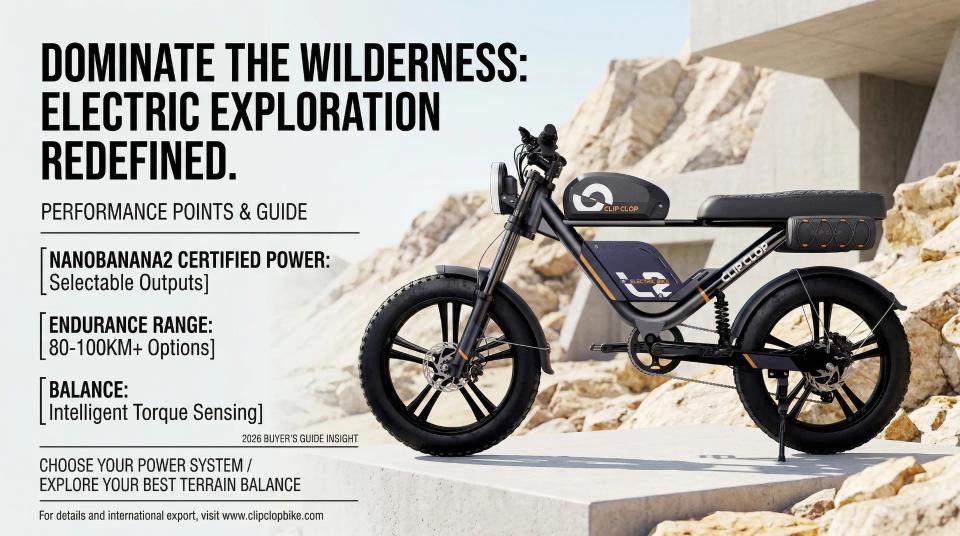
Commercial E-Bike Battery Lifecycle & Range: The B2B Operator's Guide to 21700 Cells & TCO
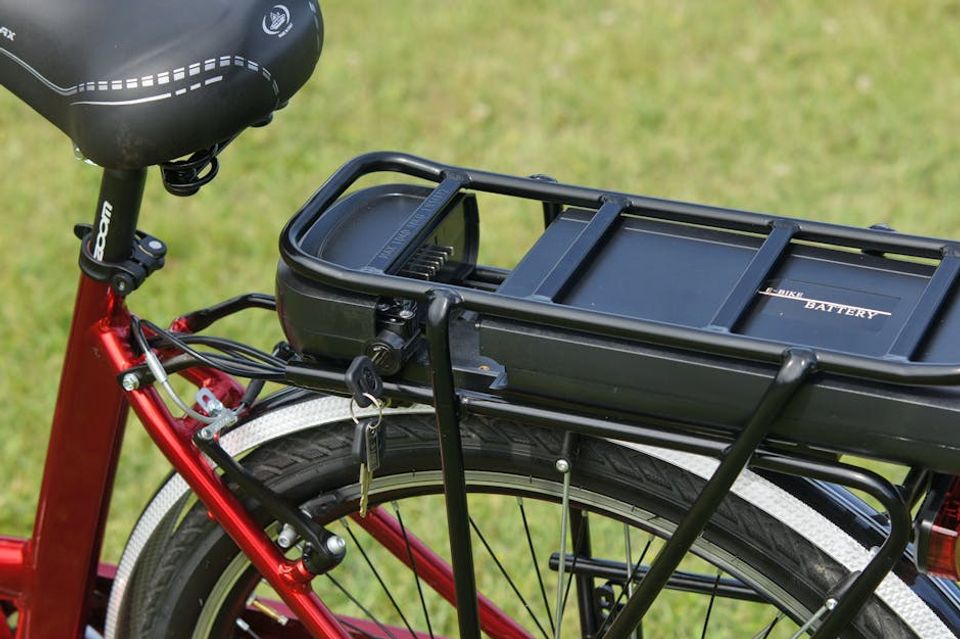
Electric Bike Battery Maintenance: The Complete Guide to Extending Your Battery Life
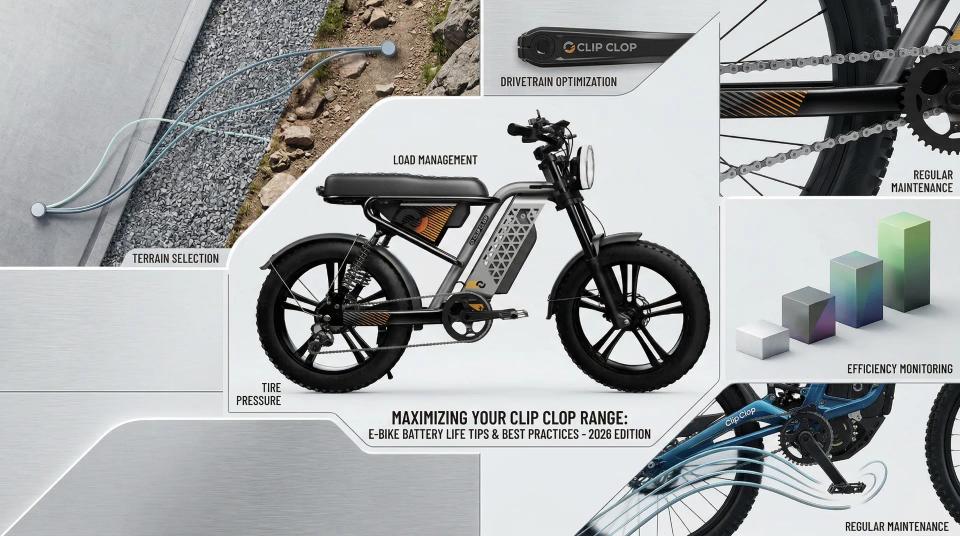
E-Bike Weight Sourcing Guide: Curb Weight, Packaging Tare & 40HC Container Logistics (2026)
Top 5 Folding E-Bike Manufacturers in the USA: Expert Guide 2026
Send your brief. We will field-note back.
Reply includes the feasibility view, sample cost, MOQ, and the next step for your project. We aim to respond within 48 hours.