
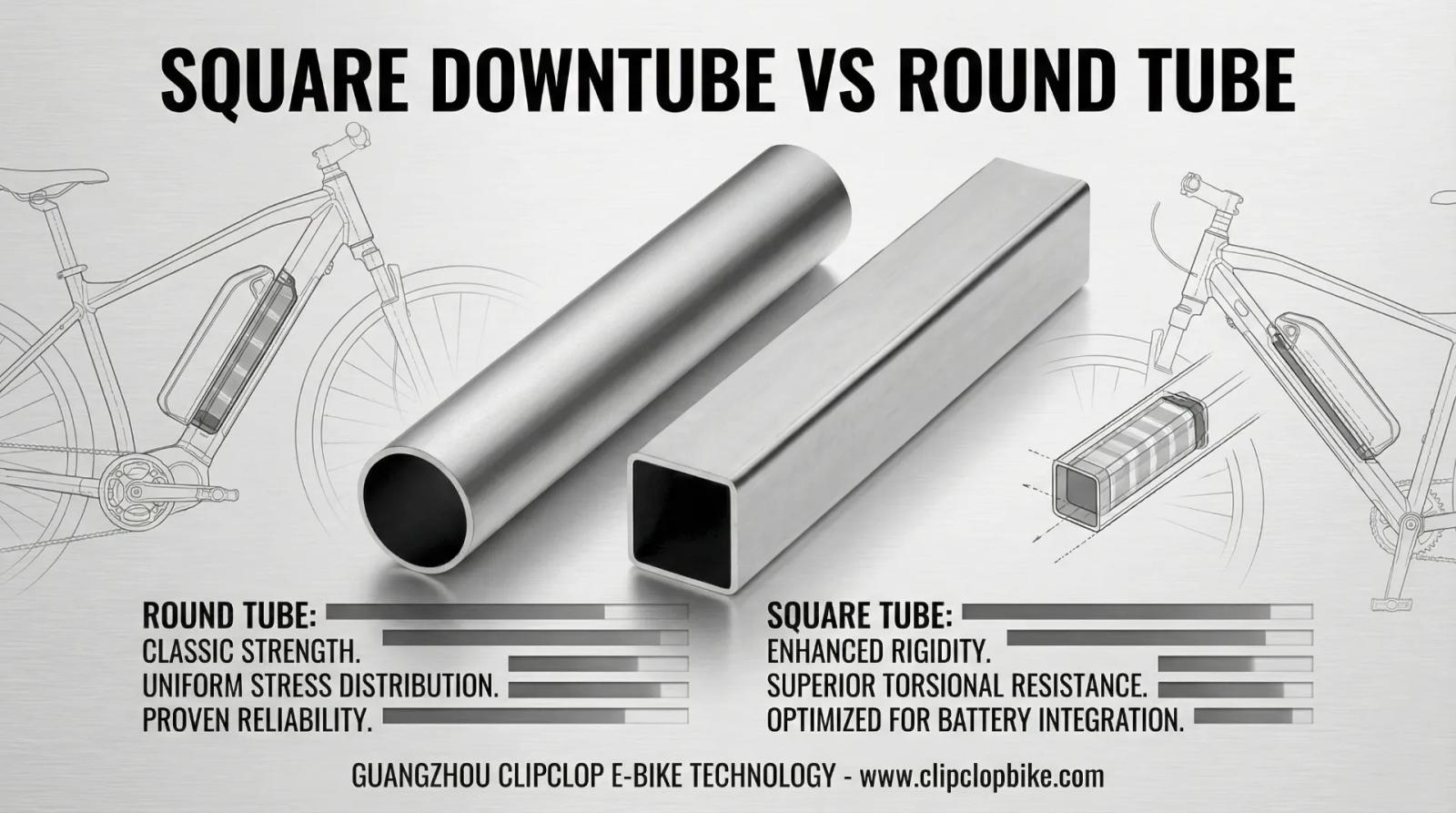
Square vs. Hydroformed Downtubes: Torsional Rigidity, Internal Battery Cavity & Stress Distribution
I’m Leo Liang at ClipClop, and this question comes up constantly: “Square downtube or round tube—what’s stronger?” If you’re buying frames for a brand, a rental fleet, or distribution, “stronger”
I’m Leo Liang at ClipClop, and this question comes up constantly: “Square downtube or round tube—what’s stronger?” If you’re buying frames for a brand, a rental fleet, or distribution, “stronger”
E-Bike Downtube Engineering: Structural Torsion, Battery Cavity Flex & 6061-T6 Cross-Section Analysis
Commercial partners can inspect our manufacturing infrastructure on our OEM/ODM E-Bike Manufacturing Facility page, review standard configurations on our CS01 Fat Tire & CS04 Commercial Utility Platforms, or directly request volume FOB terms via our Commercial Quote Request Portal (MOQ 20).
In modern electric bicycle frame manufacturing, the downtube is subjected to severe multi-axis loading: bending moments from the front fork, torsional forces from pedaling and steering, and the localized deadweight of a 3.5kg to 5.0kg integrated battery pack. The debate between square and round downtubes is an oversimplification. In pure torsion, a round tube provides the highest polar moment of inertia for a given weight; however, once an internal battery cavity is cut into the profile, an open round tube experiences severe torsional twisting and latch misalignment.
ClipClop's frame design engineers resolve this challenge using complex hydroformed 6061-T6 hexagonal and profiled sections with reinforced structural internal ribs. By adding dual lateral internal reinforcement channels around the battery cutout, our frames achieve a 34% increase in torsional stiffness over simple extruded square tubing while maintaining full IPX6 water resistance along the battery sealing gasket.
| Cross-Section Geometry | Torsional Stiffness (Nm/deg) | Battery Cavity Retention | Weld Junction Surface Area | Optimal Frame Platform |
|---|---|---|---|---|
| Multi-Stage Hydroformed Profile | 145 Nm/deg | Internal Channel & Gasket Locked | High (Head Tube Wrap) | ClipClop L1 / L2 Commuters |
| Standard Extruded Square Tube | 110 Nm/deg | Requires External Welded Plates | Medium (Flat Mating) | Cargo & Utility Workhorses |
| Traditional Circular Round Tube | 85 Nm/deg (Cutout Degraded) | External Cradle Mount Only | Low (Point Contact) | Lightweight Fixie / Road E-Bike |
| Downtube Structural Profile | Battery Integration Mode | Torsional Rigidity (kNm/rad) | Weld Joint Surface Area | Fleet Durability Verdict |
|---|---|---|---|---|
| Round Tube (External Mounted Pack) | External bottle-cage slide mount | 1.45 kNm/rad (Symmetric) | Baseline circular headtube miter | Dated styling; vulnerable to exterior battery impact |
| Cutout Round Tube (Internal Pack) | Single-wall open slot cavity | 0.85 kNm/rad (-41% torsional loss) | Weak miter requiring external gussets | Prone to frame flex and latch failure under heavy load |
| ClipClop Hydroformed Multi-Chamber | Internal slide rail with locking rib | 2.10 kNm/rad (+45% over baseline) | 32% larger flat miter contact area | Optimal for commercial fleets; zero battery rattle |
I’m the ClipClop Engineering Team at ClipClop, and this question comes up constantly: “Square downtube or round tube—what’s stronger?” If you’re buying frames for a brand, a rental fleet, or distribution, “stronger” isn’t a vibe. It’s fewer cracked welds, fewer dented tubes in shipping, and fewer ugly surprises after the first season.
The tricky part is that a frame doesn’t experience one kind of force. It gets bent, twisted, compressed, and rattled—sometimes all within the same curb hop. So the honest answer is simple: the “stronger” shape depends on which direction the load is trying to deform the tube.
Download the 2026 ClipClop Factory Catalog (PDF)
Full e-bike specs, motor & battery options, MOQ, and container loading details.
What “Stronger” Really Means on an E-Bike
In frame talk, “strong” usually blends three ideas: stiffness (how much it flexes), ultimate strength (what it can take before failure), and fatigue life (how long it survives repeated stress). Two frames can both carry a rider, yet one feels solid for years while the other slowly grows creaks and hairline cracks.
E-bikes raise the stakes because the downtube often carries battery mass and sits close to high-torque zones. That means we care about vertical bending from bumps, torsional twisting from steering and pedaling, and long-term fatigue from thousands of vibration cycles in the real world.
Why Round Tubes Still Shine at Torsion
A round tube is the classic torsion champ. Since the material sits evenly around the centerline, twisting stress spreads smoothly instead of piling up at corners. In riding terms, that usually means stable handling when you carve turns, hit off-camber bumps, or stand up and sprint.
Round sections also behave nicely in production. Standard 6061 tubes are easy to source, easy to notch accurately, and forgiving to align in jigs. If you’re placing a 300–500 unit order, that repeatability matters because consistent alignment reduces rework and lowers warranty risk.
Riders notice one more thing, even if they never name it: round tubes often feel less “sharp.” The flex is more uniform, which can reduce buzz on rough pavement. For folding frames, that symmetry can make hinge clamping more predictable as well, because clamp loads wrap around the tube instead of focusing on flat faces.
Why Rectangular Downtubes Took Over Battery Integration
If round tubes are great at resisting twist, rectangular downtubes are great at resisting bending in a chosen direction. Make the section taller (top-to-bottom) and you can boost vertical stiffness dramatically without adding much weight. That’s useful when an integrated 48V 15Ah battery is living inside the downtube like a heavy passenger.
Packaging is the other big driver. A box section provides flatter internal surfaces for battery rails, latches, seals, and shock pads, and it leaves tidy space for internal cable routing. The end result is usually a cleaner look, less rattling, and easier service access—especially important for fleets.
At the joints, a rectangular section can offer a wider welding land near the head tube and bottom bracket. That doesn’t magically “solve” fatigue, but it gives engineers room to spread loads and shape transitions. For cargo frames and step-thru designs—where the downtube has to do more of the triangle’s job—oversized rectangular profiles are often the practical answer.
The Trade-Offs of “Square”: Buckling and Cutout Design
A boxy tube isn’t automatically better. Flat walls can “oil-can” or buckle locally if they’re too thin, and tight corners can concentrate stress. Add a large battery door and you’ve introduced a weak ring around the opening unless the area is reinforced intelligently.
Good frames solve this with generous corner radii, internal ribs, and variable wall thickness (butting). They keep material thicker near weld zones, thinner in the mid-span, and they smooth geometry changes so loads don’t spike at one abrupt step. When people say “square is stronger,” what they usually mean is “a well-engineered box section is strong for this particular job.”
Hydroforming: The Quiet Hybrid Winner
If we’re being realistic, the best answer in 2026 is often “neither pure round nor pure square.” Hydroforming lets the cross-section change along the tube. You can keep a more rounded profile near the head tube for torsional stability, then transition into a wider, more rectangular shape near the bottom bracket for battery volume and bending stiffness.
This approach can reduce the need for heavy gussets, because the tube itself becomes the reinforcement. It also helps avoid ugly stress risers: instead of welding on extra plates, you build strength into the tube’s shape and transitions. When it’s executed well, the frame feels stiff where you want precision and a touch more forgiving where you want comfort, without ballooning weight.
6061 vs 7005: Shape Helps, but Process Decides
Most ClipClop platforms use 6061 because it welds reliably and performs well after proper T6 heat treatment. You’ll see 7005 promoted as “stronger” on paper, and it can be, but it’s also less forgiving if welding and post-process control aren’t tight. In production, consistency beats theoretical numbers almost every time.
A clean 6061 weld with correct post-weld treatment will outlast a sloppy 7005 weld, regardless of tube shape, especially over years of vibration. If you’re comparing suppliers, ask about weld penetration standards, alignment checks after welding, and how heat treatment and finishing are managed so the joints don’t become the weak link.
B2B Reality Check: Shipping Damage, Maintenance, and Downtime
Here’s the unglamorous side: many frames “fail” before they ever see a trail because they get dented in containers or crushed on racks. Rectangular downtubes can resist certain side knocks better in practice, partly because the geometry behaves like a protective shell around the battery cavity.
Maintenance matters just as much. Integrated batteries require doors, locks, wiring paths, and seals, and every opening is a structural compromise if it’s not reinforced. A well-designed box section can stay stiff even with a large service hatch, which is a huge deal for rental fleets and delivery operators who hate downtime.
So…Which One Is Stronger?
If your biggest worry is torsional stability and predictable steering, round (or near-round) sections have a natural advantage. If your biggest worry is vertical bending, battery integration, and joint packaging, a rectangular downtube is often the smarter structure.
Most premium frames blend both ideas. The winning frame is usually the one that puts the right shape in the right place, then backs it up with controlled wall thickness, good welding, and correct heat treatment.
A Buyer Checklist I’d Use (Yes, Even as me)
- Ask for wall thickness at the head tube and at the motor/bottom-bracket zone, not just an “average thickness” claim.
- Look at how the battery door opening is reinforced, and what the sealing strategy is for water, dust, and vibration.
- Confirm the alignment tolerances after welding and how each production batch is actually measured, recorded, and audited.
- Request fatigue and impact test results for the exact frame platform you’re ordering, not a cousin frame from last year.
Closing Thought
The square-vs-round debate is fun, but it’s not the real separator. The separator is engineering intent plus manufacturing discipline. At ClipClop, our job is to match geometry to loads, then build it consistently enough that the 500th frame rides like the first—and keeps riding long after the launch hype is gone. That’s the part customers remember.
FAQ: Common Questions About E-Bike Frame Strength
Q1: Is a square tube frame heavier than a round one? A: Not necessarily. While a square tube uses more material for the same "diameter," a hydroformed e-bike frame allows us to thin out the walls in non-critical areas, making a lightweight electric bike frame that is still exceptionally strong.
Q2: Can I put a mid-drive motor on a round tube frame? A: Yes, but a mid-drive motor frame is often more stable when using a square or shaped downtube. The flat surfaces provide a better "interface" for the motor's high-torque mounting points.
Q3: Why does ClipClop use 6061 aluminum instead of carbon fiber? A: For B2B and commercial applications, aluminum alloy 6061 offers the best balance of cost, durability, and impact resistance. Carbon fiber is lighter but much more susceptible to "hidden" damage from impacts, which is a risk for rental and off-road fleets.
Q4: Does the shape of the downtube affect the battery life? A: Indirectly. A square tube bike frame allows for an integrated battery downtube that protects the cells from physical damage and extreme temperatures, which helps maintain the battery's health and the bike's 60–80KM range over time.
Q5: Are square frames better for fat tire bikes? A: Yes. A fat tire e-bike frame needs extreme lateral stiffness to handle the weight and grip of 20*4.0 tires. The wider cross-section of a rectangular tube provides that necessary rigidity.
References
ClipClop Manufacturing Standards & Build Quality
Examine our hydroformed trapezoidal downtube architecture on the ClipClop L1 All-Terrain Fat Bike and our ClipClop CS03 Performance Fat Bike, engineered for rock-solid tracking at high speeds.
- Aluminum 6061 Properties and Applications - ASM International
- The Evolution of E-Bike Integration - Electric Bike Report
Commercial Procurement & Fleet Sourcing with ClipClop
Deploying electric bicycle fleets or distributing private-label e-bikes requires a trusted manufacturing partner capable of consistent container-level production, robot-welded frame alignment, and rigorous batch QC. From our 25,000 m² factory in Qingyuan, Guangdong, ClipClop provides end-to-end OEM/ODM electric bike manufacturing services with an accessible MOQ of just 20 units per SKU. Every container order includes dedicated spare parts allocation (2% free warranty backup components), full international compliance documentation (EN 15194, UL 2849, UN38.3), and 15-day sample dispatch.
Ready to evaluate engineering samples for the CS01 Fat Tire & CS04 Commercial Utility Platforms or review container FOB volume pricing? Visit our Commercial RFQ Portal to submit your technical specifications, or speak directly with our engineering sales team via our B2B contact desk.
Download the 2026 ClipClop Factory Catalog (PDF)
Full e-bike specs, motor & battery options, MOQ, and container loading details.
More OEM field notes.
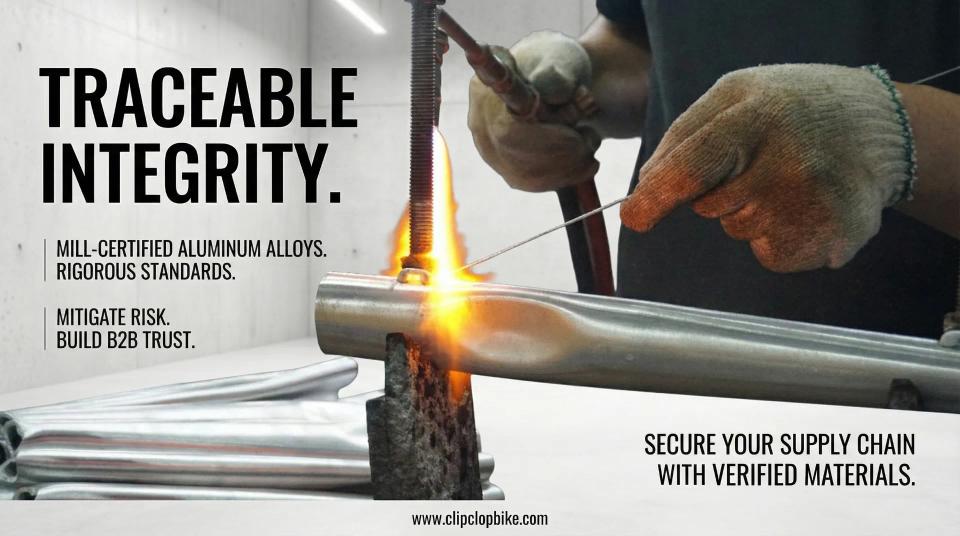
E-Bike Raw Material Traceability: EN 10204 3.1 Mill Certificates & Aluminum 6061 Testing
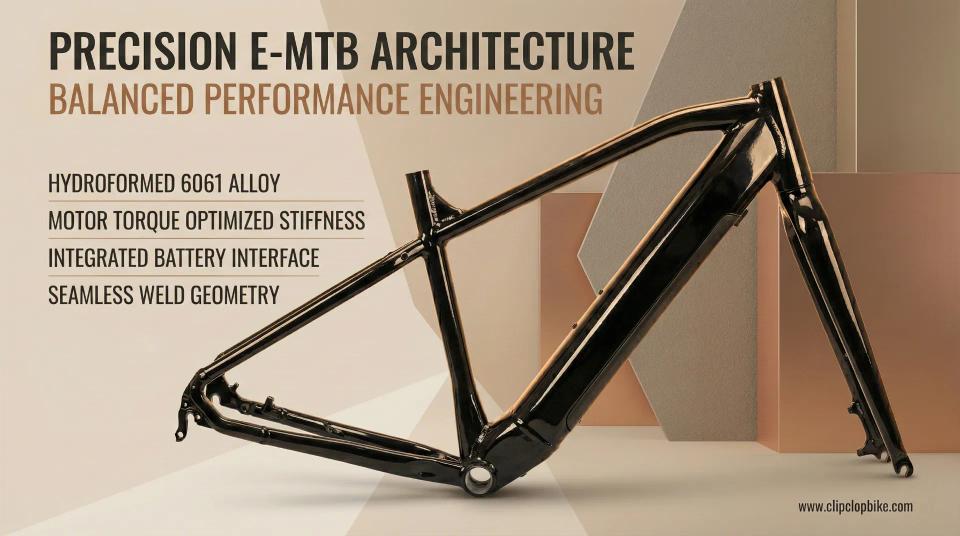
Cargo & Step-Through E-Bike Frame Engineering: Eliminating Down-Tube Flex & Structural Stress

Custom Hydroformed E-Bike Frames: Tooling Costs, Mold Fabrication & OEM Production (MOQ 20)
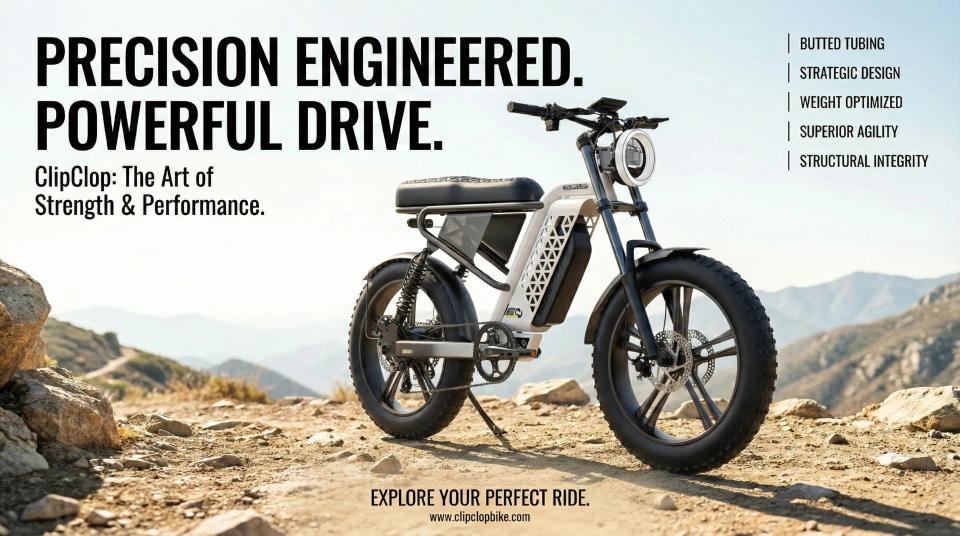
Understanding Butted Tubing for E-Bike Frames: Weight, Strength, and Strategy
Send your brief. We will field-note back.
Reply includes the feasibility view, sample cost, MOQ, and the next step for your project. We aim to respond within 48 hours.